I met Erik Jensen on a Wednesday. I had heard his voice many times – a singsong melange of questioning and knowledge in the confines of my air pods and the Saturday Paper produced podcast the 7am, but we had never met.
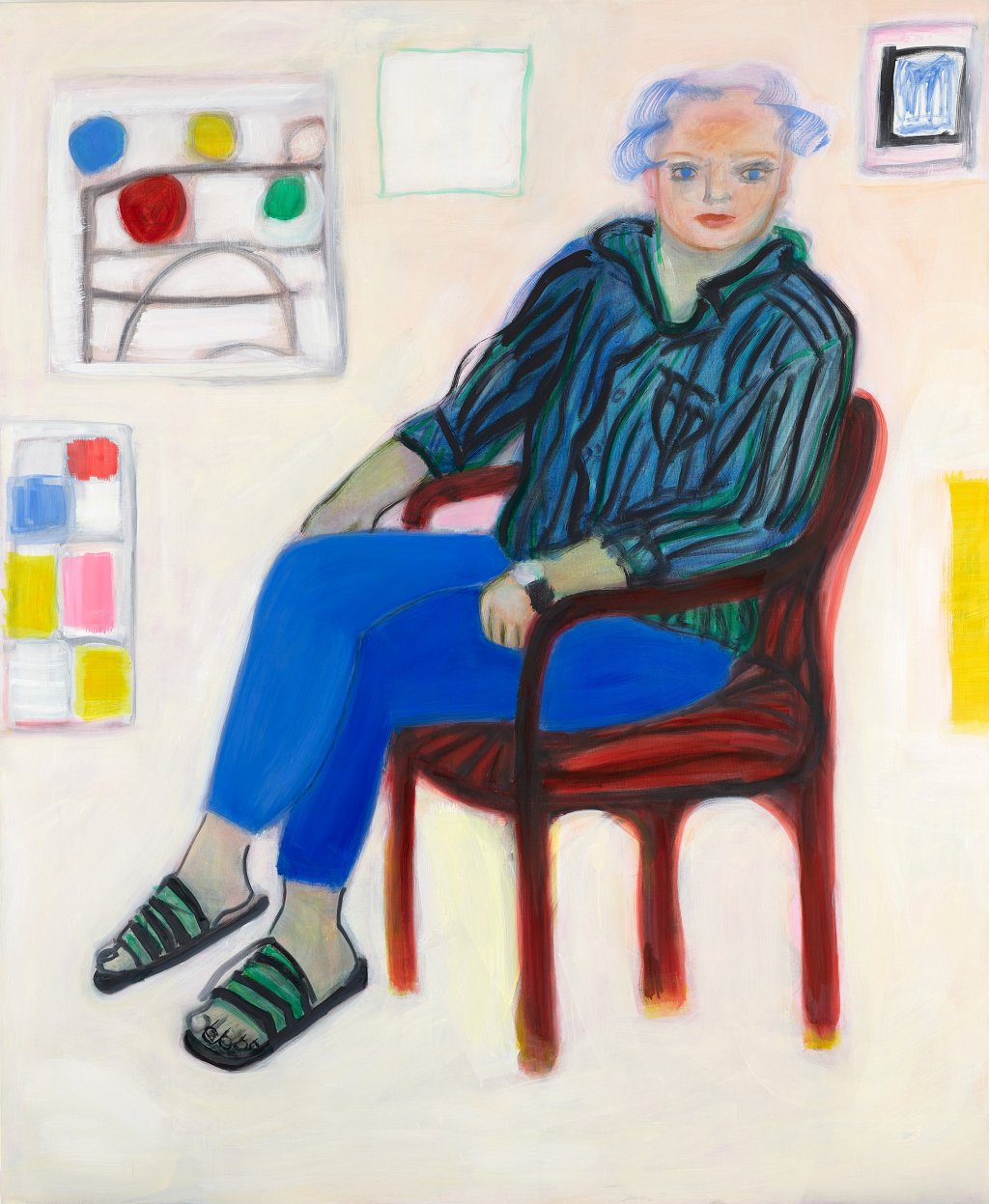
I had also seen him before in Angela Brennan’s 2023 Archibald Prize painting Portrait of Erik Jensen. In the painting he sits cross-legged, donning a blue and black striped shirt and a crown of grey, wispy hair. The application of paint is hazy, like layers of gauze stacked one on top of the other, and it creates the effect of impenetrability and space.
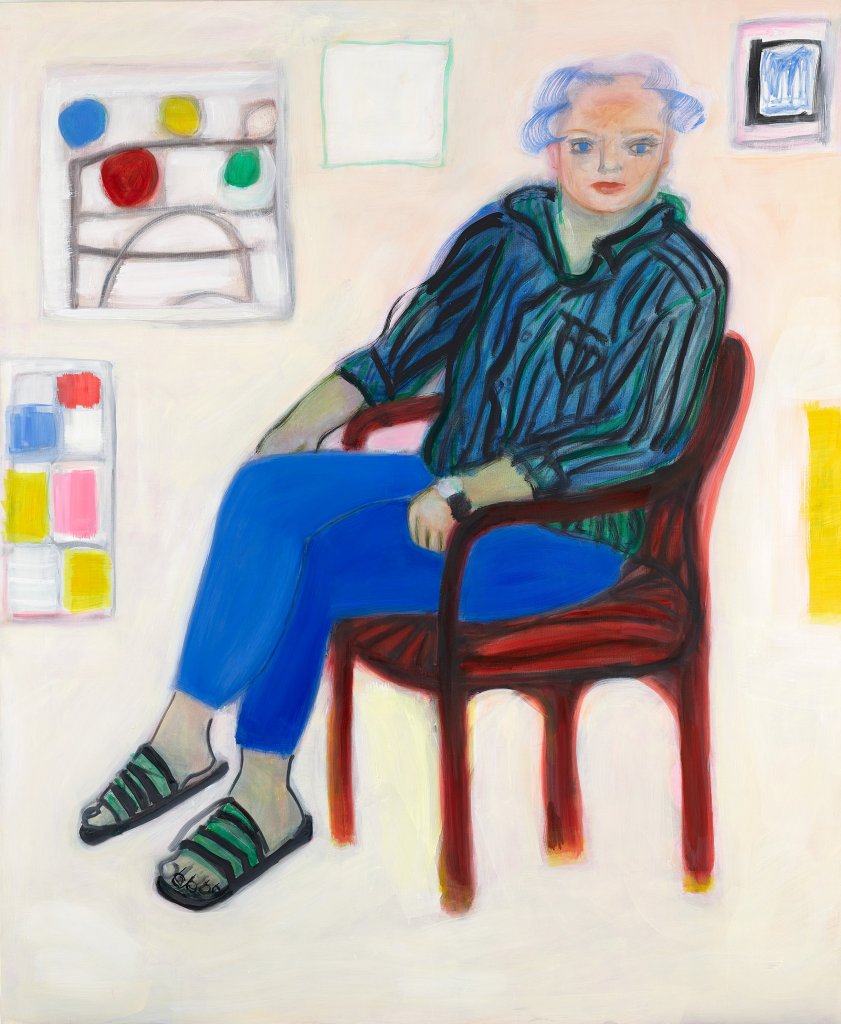
Sitter: Erik Jensen
When Jensen walks into the Fitzroy café Burnside, I am struck by how accurate Brennan’s representation of him is. His outfit closely mirrors his portrait: dark blue jeans, a striped shirt and a thick leather watch. The only caveat is the shoes; rather than adidas slides he wears a smart casual boot. Jensen’s energy is also akin to the painting, and as I greet him the weight of his intensity and intelligence lands.
Erik Jensen is the Editor-in-Chief of the Saturday Paper, a Melbourne-based weekly newspaper specialising in long-format journalism. He is also its co-founder. At age 35, Jensen has been in the industry for coming-on 20 years and has cultivated an organisation that platforms the Australian perspective and commissions long-format journalism.
An award-winning journalist, Jensen is a writer at heart and has authored Acute Misfortune: The Life and Death of Adam Cullen, On Kate Jennings, I Said the Sea Was Folded and Angry at Breakfast.
I wanted to interview him because, like Jensen, I believe in the power of writing. “You learn a lot more about the world in 10,000 words than in 500 words, ” he told me over his latte, “but it’s a lot more effort to get to the end.”
According to data from a 2022 Reuters Institute study, 16% of Australians under 35 are avoiding the news. This withdrawal has rippled throughout the broader media ecosystem, with trust in journalism fraying and a growing global population turning away from the news all together. The key reasons for this shift being: constant bad news, overwhelming amounts, biased and/ or conflicting news, and, paywalls.
In approaching interviewing Jensen what I really wanted to know was how he – as such a gifted writer – handled and considered hard news.
What I found out was that he didn’t. “I really admire people who are consistent news breakers,” he told me “but personally, that is not how I approach journalism.”
Hard news – for those of you who don’t study journalism – is a style of news writing where the who/what/where/when & how all fit neatly in the top sentence of a story. It is meant to be an impartial style of news writing which quickly feeds the reader important information. However, its critics say that its short and direct style feeds into perceptions of the news cycle as being overwhelming and depressing.
Jensen specialises – as a writer and as an editor – in long format journalism. A style of writing which focuses on presenting a comprehensive overview of an issue and that rejects the jostling competitiveness of hard news.
Currently in Australia, newspaper journalist’s rate towards the bottom of ethical and honest professions according to data from a 2021 study by Roy Morgan, with only 15% of Australian’s aged 14+ rating the industry ‘high’ or ‘very high’ in terms of ethics and honesty.
Jensen does not decry breaking news, rather he encourages journalists to approach it in a way that honours the complexity of the story. Using his prior mentor David Marr as example he stresses the importance of breaking stories with nuance. “He is someone who begins with expression,” he says pausing, “but always finds ways to break stories because he knows how important it is to tell the truth.”
If we take a moment to zoom out and analyse the current Australian media landscape, an overarching sense of audience disengagement and distrust of the media begins to emerge. I believe that long form writing provides a remedy to this issue as it allows for writers to expand on the inherent complexities of every story. A veteran of his field, Jensen summarizes it best:
“I think our job as narrative non-fiction writers is to try to find ways to make a story so compelling that you can’t stop reading it.”
And I agree.
 LILY BEAMISH
Leave a comment